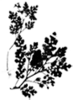

Hydrocotyle L.
Hydrocotyle is a genus of ca. 80-100 species, primarily distributed in temperate and more tropical areas. One species, Hydrocotyle vulgaris L., is a more or less widespread native species.
The genus Hydrocotyle was traditionally placed within the Apiaceae. However, it was rather aberrant and therefore accommodated in a distinct subfamily (Hydrocotyloideae) or even segregated from Apiaceae (Hydrocotylaceae). Recent phylogenetic molecular research (Chandler & Plunkett 2004) has supported exclusion of Hydrocotyle from Apiaceae and places it as a sister clade of Araliaceae. According to Stace (2010) it appears anomalous in boh Araliaceae and Apiaceae and it is possibly better treated as a family of its own.
Species of Hydrocotyle often have a bad reputation of undesirable weeds. As such they occur in aquatic or marshy natural environments or in turf.
In addition to the species treated below, at least Hydroctyle verticillata Thunb., a pantropical weed, deserves special attention. It is exceedingly similar to native Hydrocotyle vulgaris and should be looked for. It is sold as “Hydrocotyle vulgaris” in nurseries (at least in the Netherlands; see van Valkenburg & Pot 2008) and might occur as an escape or even as a deliberate introduction. Hydrocotyle verticillata often grows in more damp areas, has leaves with 9-13 nerves (vs. 7-9 in H. vulgaris), glabrous petioles (vs. hairy in H. vulgaris), inflorescences as long as to longer than the subtending leaf (vs. slightly shorter in H. vulgaris) and darker fruits (see for instance Carretero 1997). Finally, Hydrocotyle bonariensis Lam., a native of the New World but widely naturalised in warm-temperate regions of the world (including southern Europe), was recently recorded as an introduction in a plant nursery (comm. I. Hoste).
1. Leaves peltate (native) === Hydrocotyle vulgaris
1. Leaves with a deep basal sinus, never peltate === 2
2. Plant glabrous. Leaves fleshy, ca. 50-100 mm wide. Fruit distinctly stalked. Aquatic weed === 2. Hydrocotyle ranunculoides
2. Plant pubescent or glabrous. Leaves not fleshy, ca. 10-15 mm wide. Fruit almost sessile. Turf weed === 1. H. novae-zelandiae
Literature:
Carretero J.L. (1997) Hydrocotyle verticillata Thunb. (Umbelliferae) en la flora iberica. Fl. Montiber. 5: 63.
Chandler G.T. & Plunkett G.M. (2004) Evolution in Apiales: nuclear and chloroplast markers together in (almost) perfect harmony. Bot. J. Linn. Soc. 144: 123-147.
Eichler H. (1987) Nomenclatural and bibliographical survey of Hydrocotyle L. (Apiaceae) Part I. Feddes Repert. 98(1-2): 1-51.
Eichler H. (1987) Nomenclatural and bibliographical survey of Hydrocotyle L. (Apiaceae) Part II. Feddes Repert. 98(3-4): 145-196.
Eichler H. (1987) Nomenclatural and bibliographical survey of Hydrocotyle L. (Apiaceae) Part III. Feddes Repert. 98(5-6): 273-351.
Stace C. (2010) New flora of the British Isles, 3th ed.: XXXII + 1232 p. Cambridge University Press.
Van Valkenburg J. & Pot R. (2008) Landoltia punctata (G. Mey.) D.H. Les & D.J. Crawford (Smal kroos), nieuw voor Nederland. Gorteria 33: 41-49.
Watson M.F. (1997) Hydrocotyle. In: Cullen J. & al. (eds.), The European Garden Flora, vol. 5. Cambridge University Press, Cambridge: 392.